MAPUSA
Goa’s erratic monsoon this year has once again exposed the State's heavy dependence on seasonal rainfall and raised uncomfortable questions over whether enough has been done to secure the State's long-term water future.
With the India Meteorological Department (IMD) reporting a rainfall deficit of nearly 36 per cent so far this monsoon, the contrast with last year is striking.
At this point in 2025, most of Goa's major dams were overflowing. This year, reservoir levels are hovering around the halfway mark, while the Anjunem dam remains the most vulnerable with storage at only about 26 per cent.
The warning signs, however, were not unexpected.
Even before the onset of the southwest monsoon, the IMD had cautioned that India could experience a deficient monsoon due to the influence of El Niño. The possibility of below-normal rainfall was known in advance.
Yet, beyond routine storage of rainwater in dams and barrages, there appears to have been little effort to strengthen Goa's resilience against a poor monsoon or a prolonged dry spell.
Officials in the Water Resources Department (WRD) maintain that the State's existing infrastructure is functioning as intended.
"Whatever rains we receive are stored. We have six dams and all the gates are closed so far. Besides that, around 300 bandharas across the State are used to retain water, and these are closed in the first week of September to maximise storage," said WRD Chief Engineer Dnyaneshwar Salelkar.
While these measures help conserve available surface water, they also underline a larger concern – the State's water security continues to depend almost entirely on how much rain falls during the four monsoon months. If another drought-like year were to occur, experts warn that Goa has limited safeguards beyond its reservoirs.
Past lessons ignored
Former IMD and National Institute of Oceanography (NIO) scientist Dr Ramesh Kumar believes the State has failed to learn from previous years of deficient rainfall. "We have not been doing enough. Engineers in the WRD and the Drinking Water Department have not learnt from past experiences such as the deficient monsoon of 1972 and again in 2006," he said.
According to Dr Kumar, water conservation cannot be limited to storing monsoon runoff in dams. Instead, the government must build a comprehensive inventory of the State's natural water resources – including wells, ponds, lakes, springs and traditional water bodies – and systematically restore them.
"Groundwater recharge has to become a priority. Wells, ponds and lakes need regular desilting and rejuvenation. Goa receives nearly 3,000 mm of rainfall annually, which is more than sufficient. The problem is that much of this water flows untreated into the Arabian Sea because we have not invested enough in capturing and recharging it," he said.
He added that water conservation should not remain the government's responsibility alone. Housing societies, institutions and individual households must also adopt rainwater harvesting, groundwater recharge and responsible water use as part of everyday practice.
No culture of conservation
The current dry spell has also exposed another concern – public attitudes towards water. Even during periods of uncertainty, treated drinking water continues to be used liberally for washing vehicles, watering gardens and other non-essential purposes, reflecting the absence of a broader culture of conservation.
Climate experts have repeatedly warned that climate variability will make rainfall increasingly erratic, with longer dry spells interrupted by short bursts of intense rain. Such a pattern makes it even more important to capture rainwater when it falls rather than allowing it to quickly drain into rivers and eventually the sea.
The present monsoon may not yet translate into an immediate water crisis, but it should serve as a timely wake-up call. As climate uncertainty grows, Goa can no longer rely solely on favourable monsoons to meet its water needs.
Building drought resilience through groundwater recharge, restoration of traditional water bodies, rainwater harvesting and efficient water management will determine whether future generations face water security or water scarcity.
DEFICIT MONSOON: A CRISIS IN THE MAKING
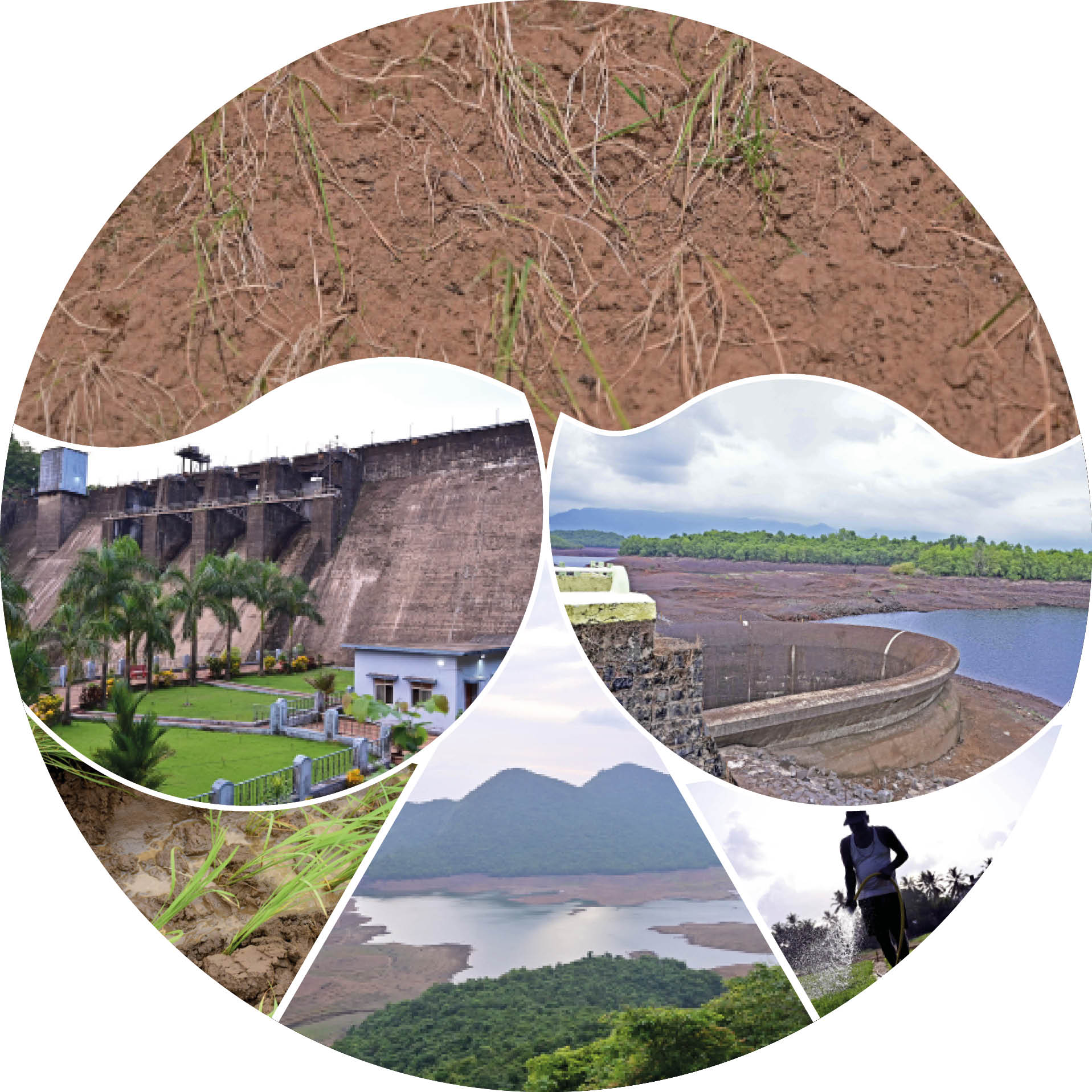
PANAJIGoa’s farmers are bracing for one of the toughest years in recent memory. The rains came late, teased briefly in the last week of June, and then disappeared for more than a fortnight. When showers finally returned on July 17, they were heavy but patchy. With El Niño strengthening, meteorologists warn the monsoon will stay way below normal.“Our saplings were drying,” said Salcete farmer Anil D’Costa, pointing to his nursery beds. “We transplanted just a portion of…