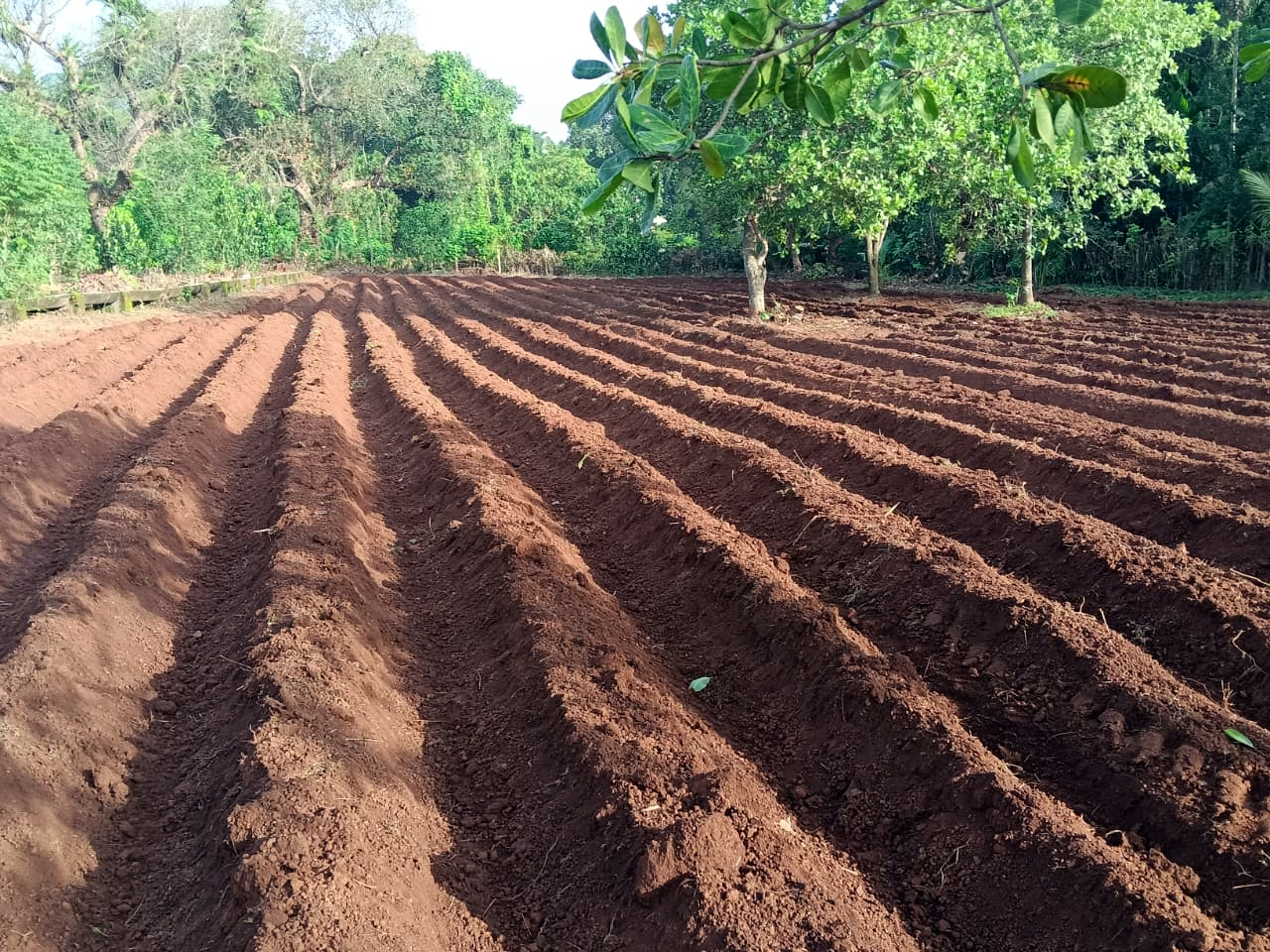
 A prolonged dry spell left agricultural fields in Sattari taluka idle, delaying sowing and plantation. File photo
UDAY SAWANT
VALPOI
The unpredictable nature of the monsoon has highlighted the vulnerability of farmers in Sattari taluka.
But the absence of a dedicated taluka-level weather station and the lack of quick and timely dissemination of weather information have left farmers both uninformed and unprepared for fluctuations in weather.
Sattari is known as one of Goa's major agriculture-based talukas. Farmers here cultivate paddy, cashew, mango, arecanut, vegetables, marigold flowers and several seasonal crops.
Owing to its diverse topography, consisting of both hilly and plain regions, the taluka supports a wide range of agricultural activities.
However, the erratic weather patterns have severely disrupted the agricultural calendar.
After an eight-day dry spell that caused newly planted crops to wither, heavy rainfall that began on Friday has now put fresh plantations at risk of waterlogging. Farmers are left wondering whether to continue planting or wait, as erratic weather patterns make agricultural planning increasingly difficult.
With no taluka-level weather forecasting system available, farmers say they are suffering repeated financial losses. They are now demanding that the government establish automatic weather stations in every taluka and provide timely, location-specific weather updates.
Fluctuations in weather
For nearly eight consecutive days, Sattari taluka received little or no rainfall. Intense sunshine dried up streams and reduced water availability. In areas without irrigation facilities, newly planted cashew, arecanut and mango saplings withered due to lack of moisture.
Farmers who had invested heavily in planting material, labour and land preparation suffered significant losses. Many complained that the absence of timely rainfall ruined their cultivation plans and caused severe financial hardship.
After the prolonged dry spell, heavy rain returned across Sattari on Friday morning. The ghat region also witnessed intense rainfall, causing rivers and streams to swell rapidly.
While farmers initially welcomed the rain, they are now worried that continuous heavy showers over the next few days could damage newly planted saplings by causing root rot. They fear that excessive rainfall has created a new set of challenges.
No monitoring facilities
At present, there is no government-operated taluka-level weather forecasting system in Sattari, making it difficult for farmers to plan cultivation activities effectively.
Farmers believe much of the damage across Sattari could have been avoided if reliable weather forecasts had been available.
"Had we known there would be no rain for eight days, we would have postponed planting. Likewise, if we had known heavy rain was approaching, we could have taken precautionary measures. But we receive no such timely information," lamented one farmer.
Added a young farmer, Yogesh Desai: “The government encourages us to use drones and modern agricultural technology. But before that, we need a reliable weather forecasting system. Only then can farmers reduce crop losses. A taluka-level weather station should be established without delay.”
Progressive farmer Ankush Gaonkar expressed concern over rapidly changing weather conditions in Sattari.
“Countries like Israel have advanced weather forecasting systems that help farmers make informed decisions. Goa also needs such technology. The agriculture department should introduce this system as soon as possible,” said Gaonkar.
When contacted, Sattari Zonal Agriculture Officer Vishwanath Gawas admitted if such a weather monitoring system were available in Sattari, it would be much easier to provide timely information to farmers. “At present, none of the talukas has a dedicated taluka-level weather station. Areas with significant agricultural activity should have this facility,” said Gawas.
Need for better communication
Besides seeking an automatic weather station in Sattari taluka, many farmers have also demanded accurate taluka-level weather forecasts through SMS and/or WhatsApp alerts.
They have also sought the dissemination of daily information on rainfall, temperature and humidity through the agriculture department and an early warning system for droughts, heavy rainfall and other extreme weather events.