PANAJI
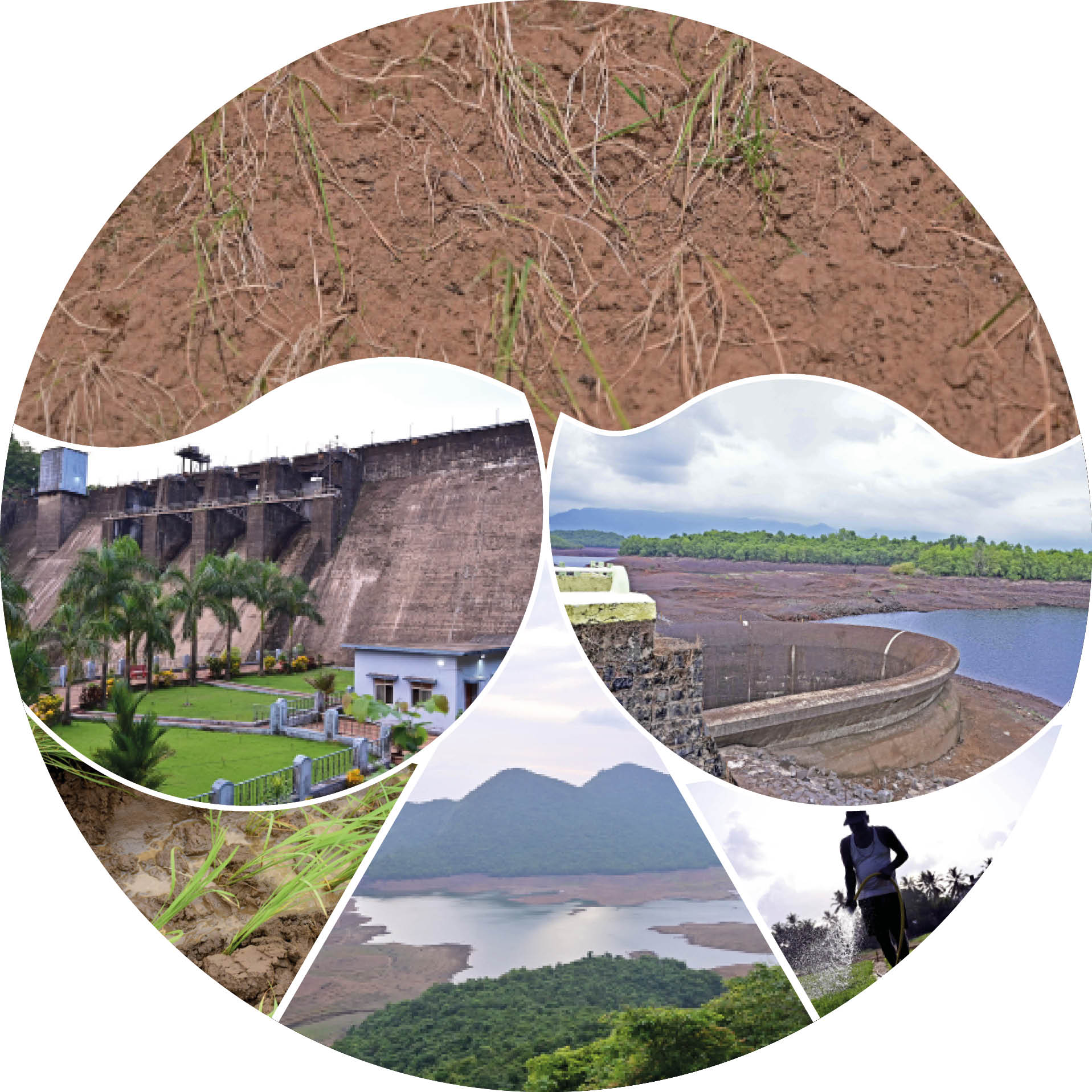
Goa’s farmers are bracing for one of the toughest years in recent memory. The rains came late, teased briefly in the last week of June, and then disappeared for more than a fortnight. When showers finally returned on July 17, they were heavy but patchy.
With El Niño strengthening, meteorologists warn the monsoon will stay way below normal.
“Our saplings were drying,” said Salcete farmer Anil D’Costa, pointing to his nursery beds. “We transplanted just a portion of it when the rains first came. The rest are slowly drying. Without water, we can’t risk sowing,” he said.
But fortunately for him and other farmers, a wet spell since Friday, though patchy, has helped.
Elsewhere in the taluka in Benaulim and adjoining villages, farmers with small holdings joined hands to pump water from nearby wells into their fields to retain soil moisture until it showers again to help keep their transplanted paddy saplings survive.
Across Bardez and Tiswadi, cultivators say barely 10% of fields have been transplanted. Coastal farmers in Velsao complained of saline intrusion. “Freshwater isn’t enough to flush the salt. The crop is suffering,” said one cultivator from Velsao.
Kharif season faces trouble
The kharif season, dominated by paddy, is already off track. Farmers are abandoning long‑duration varieties like Jaya and switching to short‑duration ones such as Jyoti and Karjat wherever possible. “We don’t want to gamble. Shorter crops may give us something, even if yields are lower,” said a farmer club member from Nachinola in Bardez.
Agriculture officials admit the situation is worrying. “Delayed transplantation will hit yields. We are advising farmers to use short‑duration seeds, conserve water, and refrain from using chemical fertilisers,” one Zonal Agriculture Officer (ZAO) said.
In Curtorim, cultivators were frustrated. “We’ve already spent on labour and seeds. If the rains don’t stabilise, we’ll be losers,” said a farmer at a local club meeting.
Rabi season looks bleak too
The rabi season depends on groundwater recharge. With reservoirs and ponds dependent on the monsoon, farmers fear they won’t have enough water for pulses, vegetables, or winter paddy if what meteorologists are predicting comes true.
Vegetable growers in Valpoi say they may cut back production. “Beans and brinjal need steady irrigation. Without water, we will face poor yields and losses,” said a grower from Ravan village, part of an entire community of about two-dozen organic farmers who cultivate brinjal, okra (bhende), red amaranth (tambdi bhaji), and radish (mullo) on a commercial scale.
At the southernmost tip of Goa in Canacona, a farmer who usually plants two hectares of winter paddy said he may halve his acreage, depending on how the monsoon plays out.
“I cannot afford the costs of irrigation if our ponds and ‘onddes’ (open well-like depressions in fields) do not fill up. It is wiser to avoid the risk by reducing acreage,” he said.
Horticulture: mango, cashew will face stress
Horticulture is no safer if the monsoon plays out the way meteorologists are predicting. Plantations of mango and cashew, the two prime horticulture crops in Goa, rely on stable water tables. A weak monsoon this year could mean poor flowering and fruiting in February-March-April next year. Younger cashew grafts in the hilly terrain of Bicholim and Sattari will be struggling.
“Even marigolds for Ganesh Chaturthi may not germinate properly,” warned a farmer in Maulinguem who over the last three kharif seasons had shifted to the golden flower which fetches a premium during the Ganesh Chaturthi, Dussehra and Diwali festivals.
Mango growers in the hinterland region of the South, in Quepem and Sanguem, known for expansive mixed-fruit orchards, are also worried about next year’s crop. “If our trees don’t get enough water now and groundwater does not get recharged, flowering will be affected and weak. That means fewer mangoes in 2027,” said Shailesh Desai whose extended family owns several hectares of a mixed-fruit tree orchard.
“Time to go organic”
Former agriculture officer Miguel Braganza believes the crisis is also an opportunity. “Rainfall is 38% deficient but spread out, almost like the SRI method with intermittent drying. Farmers should avoid chemical fertilizers and use compost with phosphate and potash‑solubilizing microbes. Drone sprayers can deliver foliar nutrients. And this is the right time to push organic farming under PKVY,” he said.
Agriculture service providers like Goencho Xetkar have already begun offering drone spraying services. “It saves labour and ensures uniform coverage,” said one operator.
Policy gaps persist
Farmers say traditional comunidade bunding of lakes once ensured aquifer recharge. Its dismantling has left villages dry. “We need bundhs back. Without them, our wells don’t fill and groundwater recharge is deficient,” said a farmer in Curtorim.
The government led by Chief Minister Pramod Sawant has promised compensation under the Shetkari Aadhar Nidhi scheme. A day before the skies opened up, Sawant had announced that the agriculture department has been asked to conduct surveys to assess pre-sowing and sowing losses due to the dry spell.
But cultivators argue the relief is too little, because beyond financial losses, there is heartbreak. A woman cultivator from Sanguem, Maria Fernandes, who suffered crop loss due to the late rains last year which devastated her ready-to-harvest paddy crop, said: “We invest everything, from labour to seeds, fertilisers and our sweat. If the field goes dry due to an erratic monsoon, it all goes waste. How do we recover?”
With irrigation costs rising, food prices are expected to climb. Younger farmers are considering quitting paddy and moving to quicker cash crops like vegetables or even floriculture. “Rice is no longer sustainable. I may shift to vegetables or leave farming,” said Manguesh Velip from Rivona.
Road ahead
Experts from ICAR and farmer groups say Goa's agriculture sector needs long-term solutions and investments. "The stop‑gap relief for losses suffered given by the government through existing schemes is only like band-aid," said a senior scientist at the ICAR.
According to him, the government machinery should be more proactive in enhancing supply of short‑duration seeds, subsidising irrigation, restoring bunding and also investing in drainage of fields.
"In the very long‑term, policies aimed at reducing climate dependence, harvesting rainwater and diversifying into horticultural crops are the way forward," he added.
The deficit monsoon thus far has left many of Goa’s paddy fields parched, cast a cloud of doubt over the winter rabi season, and left mango and cashew plantations vulnerable. Agriculture in Goa has long been starved of structural reforms -- bunding revival, water harvesting, organic promotion, and climate‑resilient infrastructure.
The rains may fail but the government's pledge for reform through the nearly one-year-old ‘Agriculture Policy’ should not.