


MARGAO
Devastation of paddy fields by rampant discharge of sewage is not only restricted to the sprawling fields along the Davondem-Ambajil belt in Agriculture Minister Vijai Sardesai’s Fatorda constituency.
Neighbouring Nuvem too is facing the brunt of sewage water and the resultant water hyacinth weed in many areas of the village, which borders Davondem.
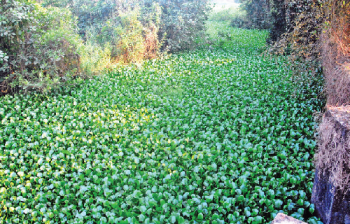
In fact, when The Goan team descended on Cupem, a small ward of Nuvem village, right behind the Honda showroom, it came across a thick green carpet of the water hyacinth weed spread across the once fertile and lush green fields.
Farmers of Cupem no longer enter the fields, not only because of the presence of sewage water, but also thick growth of the weed has come in the way of cultivation.
Says an elderly farmer, Francisca Borges: “I have stopped going to the fields since the last two years. The growth of the water hyacinth weed has prevented us from entering the fields. We have been cultivating these fields for generations, but the presence of the weed and the sewage has forced us to stay away,” she lamented.
Borges and other local residents of Cupem also complained of sewage odour emanating from the water bodies and fields. “The situation is pretty bad, mostly late evenings and early mornings, when we are literally forced
to breath foul odour,” she added.
Chairman of the Nuvem Bio-diversity Committee Jose Roque Andrade said the situation is indeed a matter of concern for the farmers as well as the village.
“The government should immediately intervene because this is one area where farmers are ready to cultivate their fields,” Andrade said, adding “given that the sewage acts as a fodder for the water hyacinth weed, the government should stop its flow into the fields.”
He pointed out that farmers have given up cultivation because it’s very difficult to remove the weed while cultivating the kharif crop. “The fish which was growing in this water has disappeared due to lack of oxygen. The ecosystem is totally disturbed. One can find the same weed in river Sal. The river water is completely polluted due to release of waste. About 50 years people used to wash their clothes and have bath in the river, but now if you put your legs in the skin gets affected,” Andrade said. It’s time to get rid of the pollution and monitor the quality of the water, he added.
Local Nuvem MLA Wilfred D’Sa echoed similar sentiments. “The Bogti Tollem has been famous for cultivation of paddy as well as vegetables. Around four years ago, I had taken up cudgels for the beleaguered farmers after sewage water from the damaged Margao sewage line found its way into the water bodies, including the tollem at Nuvem,” Wilfred said.
Saying that the ground reality remains unchanged till date, the Nuvem MLA has disclosed plans to raise the issue in the ensuing session of the Goa Legislative Assembly. “Many farmers have stopped entering the fields because of fear of being affected by disease. It is indeed sad that farmers are forced to abandon agriculture,” he said.
Agriculture Minister Vijai Sardesai, who hails from neighbouring Fatorda, is aware of the devastation caused to agriculture in Davondem-Ambajim and Nuvem. He reiterated that this is a systemic issue and a solution will come once the damaged line is replaced and the large tracts of the fields are de-weeded.


