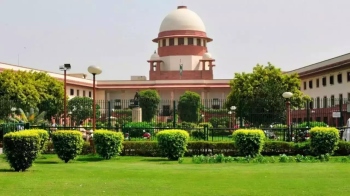
The Supreme Court’s unhappiness over the actions of some of the governors to hold back the assent of key bills passed by assemblies including Punjab coupled with strong observation by apex court about the governors as well as chief ministers “to do a little bit of soul searching” may set a new precedent for future which will be a good omen for the health of democracy in the country.
It was a recent plea of the AAP government in the Supreme Court which set the ball rolling about the intentional delay in according the assent to the important bills by the governor. Some aggrieved state governments have already approached the highest court in the country to get relief on an identical issue. Constitutional experts say that a new trend of targeting opposition ruled states through appointees of the Centre is not a harbinger a new era but may prove suicidal to the tenets of the Constitution. None can deny that fact that successive political parties’ governments at the Centre including Congress has indulged in misuse of Article 356 while dismissing the elected state governments which was done through their proteges appointed as Governors from time to time. They say the apex court is the last hope left with the distressed and helpless chief ministers of opposition led states to draw a clear line visa-a-vis their powers as accusations have been levelled against the Centre for targeting their opponents through governors.
Second, chief ministers are in a bind when governors start acting in an unconstitutional manner and the Centre remains a ‘silent spectator’. Governors tend to forget that they are not elected representatives of people but nominated heads of the states which lead to confrontation with chief ministers.
Third, legal experts attach a lot of importance to strong observations made by Chief Justice DY Chandrachud who wants governors to respect and implement the spirit and mandatory provision of Article 200 of constitution which makes it obligatory to governors to either give assent or return the bills as soon as possible.
Fourth, it was not only the Punjab government which has brought to the attention of the apex court an issue of ‘intentional inaction’ of the governor in seven key bills which include finance and state affiliated colleges. In similar context, some of the opposition ruled states have also approached the supreme court citing pending bills with governors leading to unnecessary confrontation.
Fifth,every citizen of India is hopeful that chief justice of India as per his daring and courageous spirit may settle this core issue for ever which will put break on the discretionary and illogical powers of the constitutional heads which had been witnessed during previous regimes at the Centre especially in view of the imposition rule in elected opposition states in the country.
The Tamil Nadu government had petitioned the President Draupadi Murmu about the conduct of the governor to block bills which affected the functioning of the government.
It may be recalled that eight political parties had written a letter to Prime Minister Narendra Modi in March this year and complained against the misuse of the powers in many states by governors and Lt governor. The letter had highlighted the illegal actions of governors and misuse of investigating agencies in Rajasthan, Telangana, Tamil Nadu, Punjab, Maharashtra etc. but nothing happened. The opposition parties in Tamil Nadu were up in arms against the governor and urged the Centre to take action against him. Assembly speaker M Appavu had lambasted the governor and criticized the illegal action which smacks of some hidden agenda.
In another gross violation of the constitution, Tamil Nadu governor RN Ravi had dismissed a minister. It all started in January,2023 when he omitted certain paragraphs from the text prepared by chief minister, MK Stalin’s government and walked out of the assembly which was reminiscent of an identical bizarre episode of walk out by the then governor West Bengal Padamja Naidu in February 1965. In an extreme case of a step taken by the Tamil Nadu chief minister state assembly passed two bills in 2022 which empowered the state to appoint vice-chancellors to 13 universities, curtailing the governor’s power which had led to direct confrontation.
Like Punjab, Rajasthan chief minister Ashok Gehlot had recommended the urgent convening of the assembly session to prove his majority but the governor lingered on it as he wanted to give chance to defectors led by Sachin Pilot to topple the government. In a midnight swoop, former governor of Maharashtra, Bhagat Singh Koshyari’s decision was not upheld by the Apex Court to ask the then CM Uddhav Thackeray to seek trust vote of trust which prompted him to resign. Several instances of governors or Lt governors have come to light where they have ignored the recommendations of the chief ministers to convene the sessions.
Prior to his election to the post of vice president of India, Jagdeep Dhankar had an open tiff with CM Mamata Banerjee on several issues including appointments of VCs. Dhankar had taken a strong objection to the decision of Mamata government to appoint 25 VCs of the universities without his nod as Chancellor. TMC had asserted that the governor ought to have approved the names which were finalized by search committees and if he refused to give approval then state education department had powers to go ahead with its decision.
The Supreme Court had delivered two unique and historical verdicts about Maharashtra imbroglio and powers of Lt governor, union territory Delhi which could have far reaching effects on the role of “Puppet” governors appointed by the government of the day in Delhi to rule through ‘proxy’ and extra constitutional authority exercised by the Centre to undermine the sanctity of elected governments like AAP government in the national capital. Notwithstanding the fact that Shinde government had survived due to blunder committed by Uddhav Thackeray, who resigned on moral ground and refrained from facing floor test, legal experts said that as per apex court, the foundation of the government was illegal as governor had exercised the powers which were not vested in him by the constitution of India.
Analysts believe that unless the Centre tightens the noose around over enthusiastic governors, it will be living in fool’s paradise to expect any let up in confrontation between chief ministers and governors though there is a ray of hope from the supreme court which may settle this issue to strengthen the democracy.