Ritesh Madhok
The Tata Sierra has returned in more than one form, but it is the all-electric version that appears to suit the character of this revived nameplate best. Its relaxed SUV proportions, spacious cabin and technology-focused positioning work naturally with the refinement and instant performance offered by an electric powertrain. We drove the flagship Empowered QWD A variant, which sits at the top of the Sierra EV range. This version uses the larger 75kWh battery and a dual-motor QWD system, producing a combined 306PS and 504Nm. It also brings additional terrain modes, Boost mode, Off-road Assist and almost every comfort, safety and technology feature available on the SUV. Prices for the Sierra EV range begin at Rs 18.79 lakh, ex-showroom. However, the top-spec QWD is the version that best demonstrates what Tata’s latest electric architecture is capable of delivering.
Exteriors
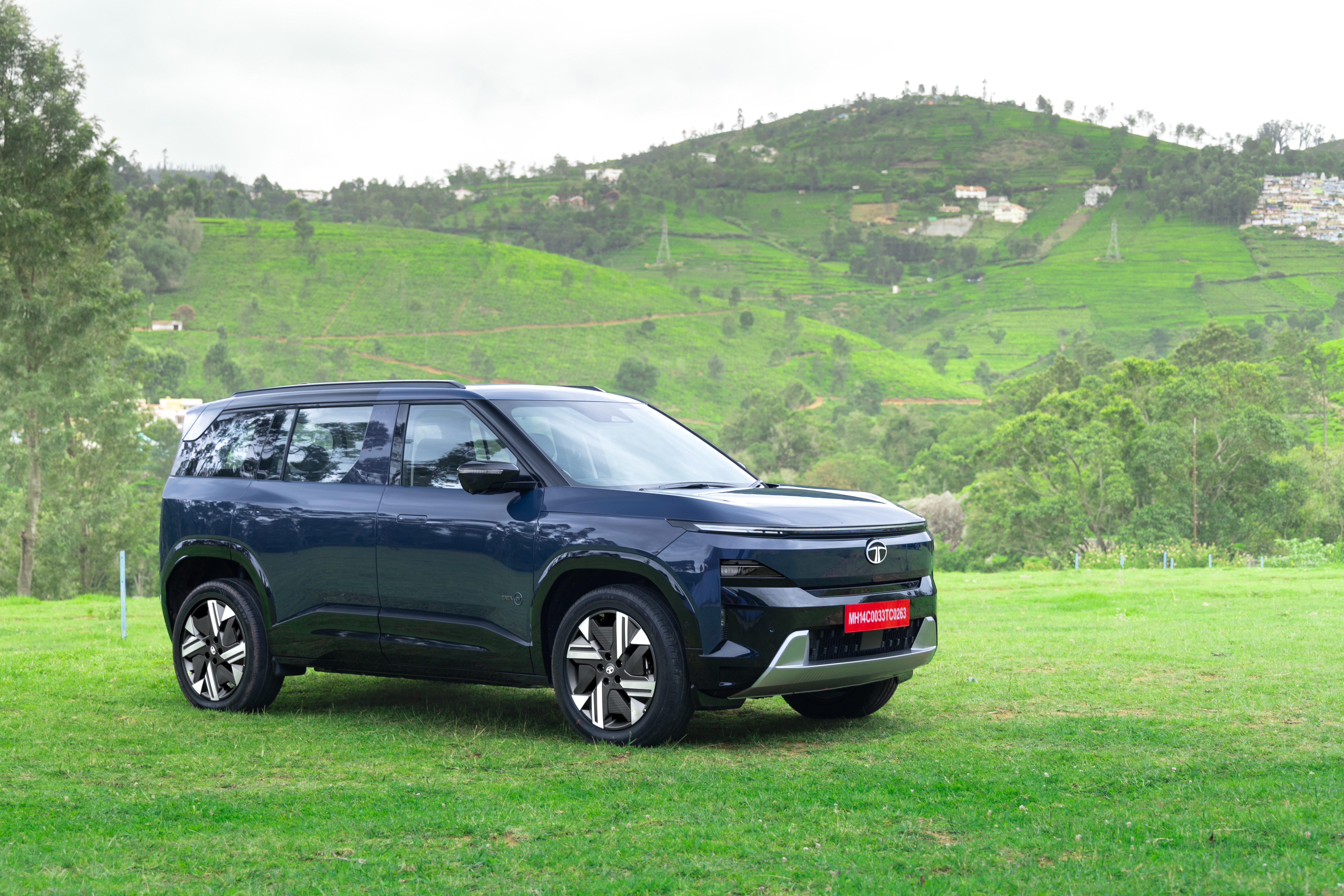
The Sierra EV manages to acknowledge its predecessor without relying excessively on retro styling. Its upright bonnet, squared-off shoulders, tall roof and distinctive rear-quarter glass treatment provide the required visual link, while the overall design remains clean and contemporary. The EV receives a largely enclosed front section, slim LED lighting and a smoother bumper design. On the flagship model, 19-inch alloy wheels, flush door handles and illuminated charging-port detailing add to its premium appearance. Its profile is arguably the strongest angle. The large glass area, thick pillars and upright tail create a recognisable silhouette in a segment increasingly populated by similarly shaped electric crossovers. The broad rear and connected lighting signature complete the design, although the slim lamps can appear slightly undersized against the Sierra’s substantial bodywork. Nevertheless, the Sierra EV has something many modern SUVs struggle to establish: An identity of its own.
Interiors and tech
The Sierra EV receives a completely different dashboard design from Tata’s other current SUVs. The layered layout, horizontal lines and lighter cabin theme contribute to a cleaner and more upmarket ambience. The highlight of the flagship variant is the Horizon View triple-screen arrangement. It combines a digital instrument cluster, central infotainment touchscreen and a separate passenger display. The latter can be used for entertainment, games and selected applications, giving the co-driver something meaningful to interact with during longer journeys. Apart from some delay during initial start-up, the screens respond quickly and the graphics look polished. The 12-speaker JBL Black audio system with Dolby Atmos is another standout, delivering excellent clarity and powerful bass that benefits further from the naturally quiet EV cabin. There also is a Soundbar infused into the dashboard for further premium sound experience. Equipment includes ventilated front seats, powered adjustment for both front occupants, driver-seat memory, dual-zone climate control, a panoramic sunroof, multicolour head-up display, wireless charging and connected-car technology. Space is another strong point. Rear passengers receive generous headroom and legroom, while the reclining backrest and nearly flat floor improve comfort for three occupants. The expansive sunroof and large windows make the cabin feel particularly airy. Material quality, however, is not completely consistent. The upper dashboard and frequently touched surfaces feel premium, but some plastics lower down appear ordinary for a vehicle at this price.
Battery, drive range & power output
The Empowered AWD A uses a 75kWh battery powering electric motors on both axles. Together, they develop 306PS and 504Nm, enabling the Sierra EV to accelerate from zero to 100kmph in a claimed 5.8 seconds when Boost mode is activated. Tata claims an MIDC driving range of up to 665km. A more realistic expectation, according to the manufacturer’s C75 estimate, is around 500km or slightly more, depending on traffic, speeds, weather conditions and climate-control usage. The battery supports rapid charging at up to 1.6C. Under ideal conditions, Tata says approximately 263km of claimed range can be added in 15 minutes, while a 20 to 80 per cent charge takes around 26 minutes. The SUV also offers vehicle-to-load and vehicle-to-vehicle functionality, making it possible to operate external appliances or transfer charge to another compatible EV. A lifetime high-voltage battery warranty is available to the first private owner, subject to the company’s applicable terms.
Drive and handling
The first thing you notice from behind the wheel is how effortless the Sierra EV feels. There are no gearshifts, engine vibrations or delays in power delivery. In its regular modes, the response is progressive and easy to manage around town. Switch to Sport or engage Boost mode, and the Sierra displays the full strength of its twin-motor setup. Overtaking requires little planning and highway speeds arrive rapidly. The QWD system also puts the power down cleanly, even when the surface is loose or damp. Refinement is excellent. At lower speeds, the cabin remains exceptionally quiet, and wind and road noise are reasonably well controlled on the highway. The steering is light and makes the Sierra easy to maneuver, but it offers limited feedback. Quick direction changes reveal noticeable body movement, and the Sierra does not shrink around the driver when pushed through tighter corners. Ride quality is firm but composed. The independent multi-link rear suspension and frequency-dependent dampers handle broken roads confidently, although sharper bumps can be felt through the 19-inch wheels. Six terrain modes—Normal, Grass/Snow, Mud-Ruts/Gravel, Sand, Rock Crawl and Custom—along with Off-road Assist give the QWD version added versatility. It is not designed as a hardcore off-roader, but the dual motors provide reassuring traction on inclines, loose surfaces and mild trails.
Safety
The Sierra EV is equipped with six airbags, electronic stability control, all-wheel disc brakes and multiple traction-management systems. The flagship version adds Level 2+ ADAS with functions such as adaptive cruise control, autonomous emergency braking, lane assistance and Intelligent Speed Assist. It also receives a 540-degree surround-view camera with a transparent-bonnet function, adaptive front and rear turn cameras and blind-spot views. Auto Park Assist, remote parking and Summon functionality are also included.
Verdict
The Sierra EV feels like one of Tata’s most complete electric products. It combines a usable long-distance range, strong performance, spacious seating and useful all-weather capability within a design that stands apart. The old Sierra became memorable because of how it looked. This new Sierra EV has enough substance to be remembered for how it drives as well.